
There was a time when a fan was little more than a motor with ambitions—blades spinning, air moving, purpose fulfilled. No memory, no nuance, no dialogue with its surroundings. It cooled, yes, but it did so blindly, like a metronome ticking in a room that might already be silent.
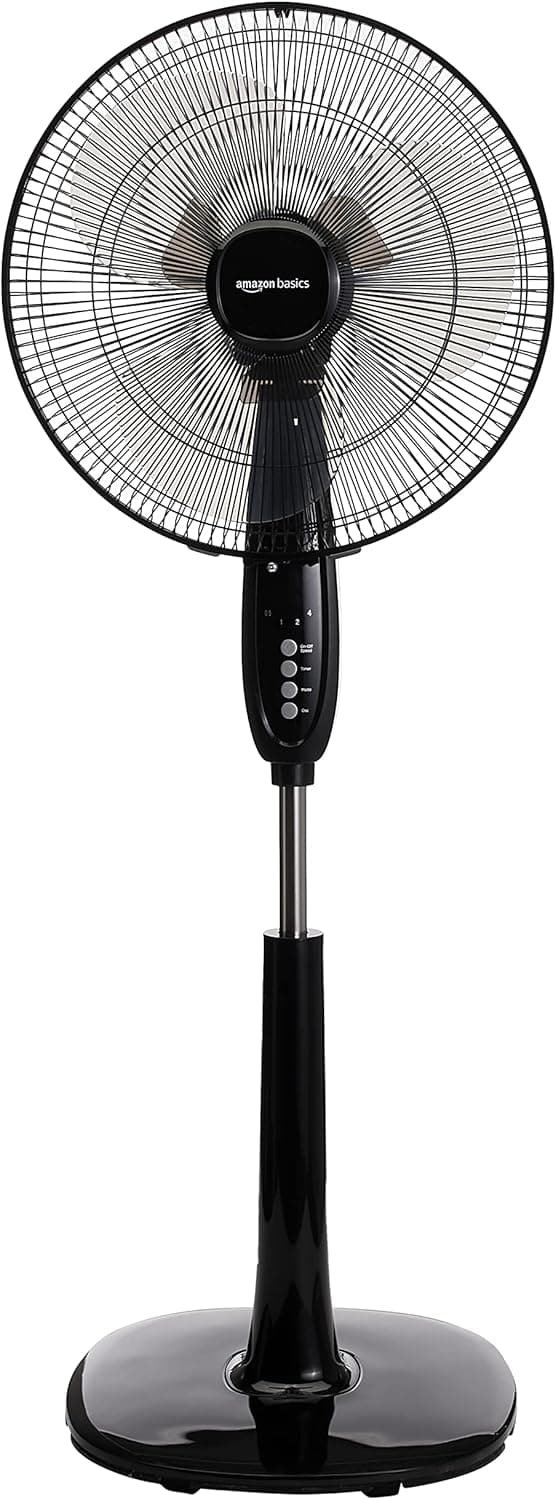
The Amazon Basics Digital Dual 3-Blade Pedestal Fan suggests a subtle evolution. Not a revolution, not quite—but a shift. The familiar silhouette of a standing fan remains, yet beneath that recognizable form lies something new: a hint of logic, a trace of decision-making. As if the breeze itself had begun to think.
The Familiar Frame, Reconsidered
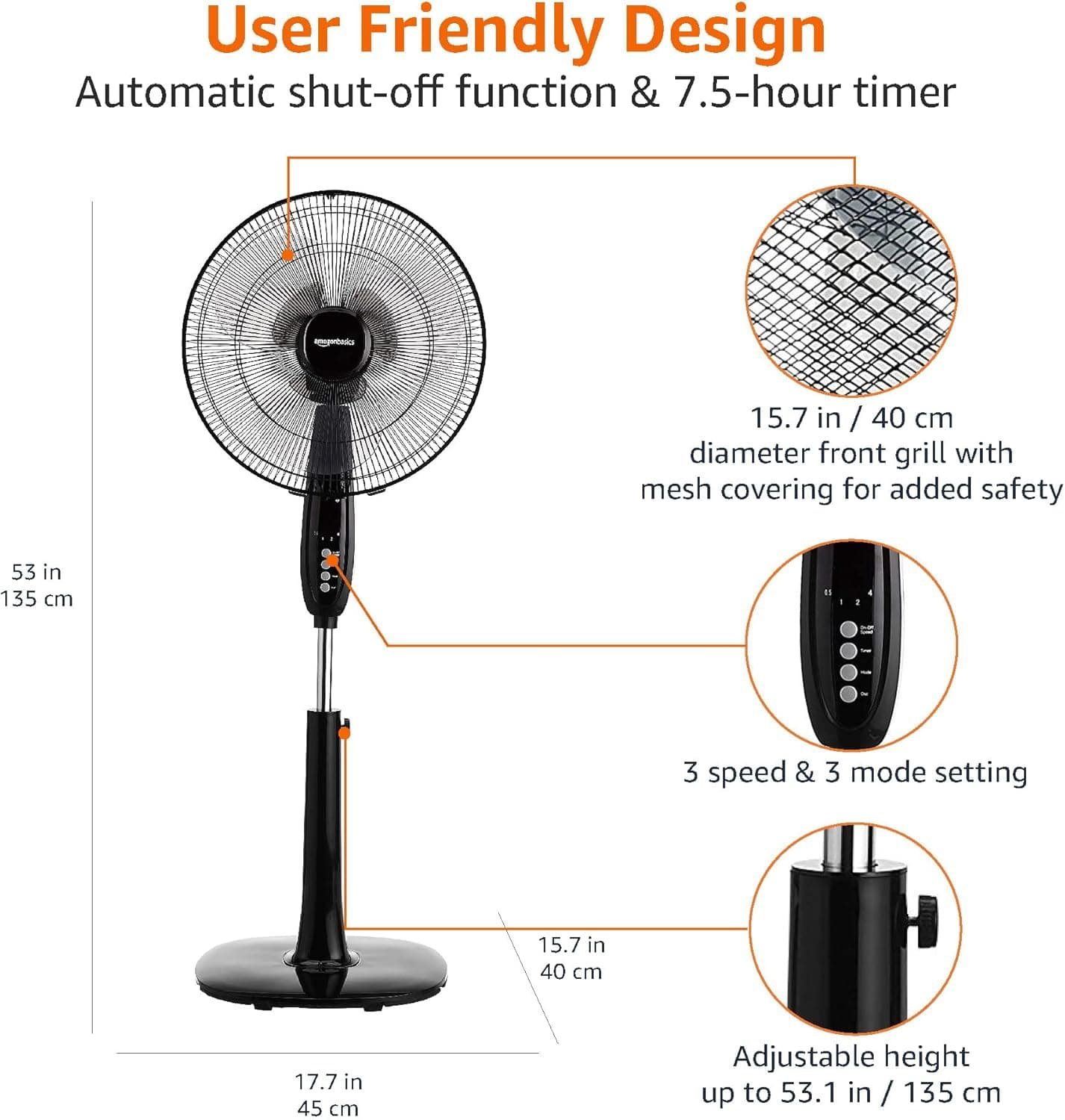
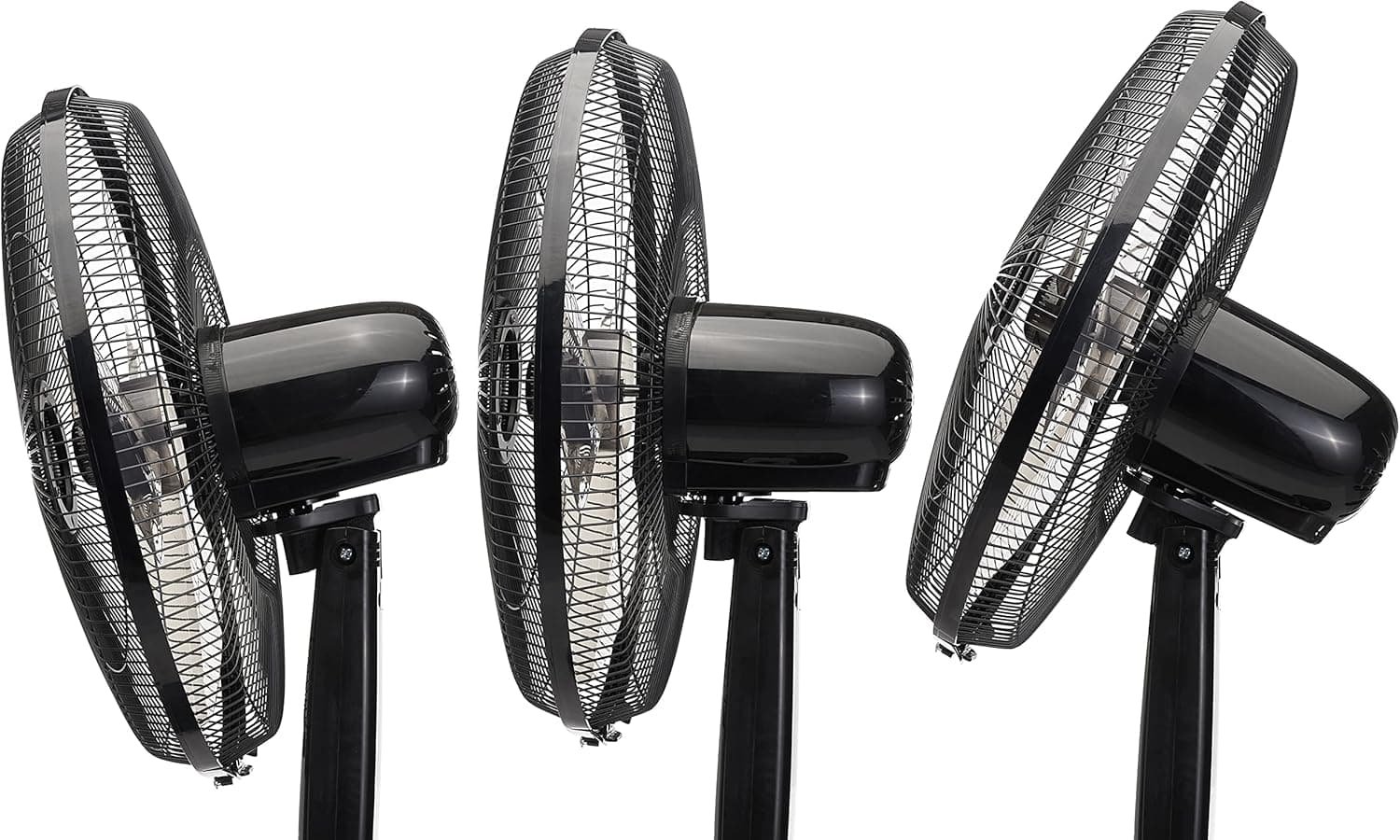
At first glance, nothing seems surprising. A black pedestal, adjustable height, tilting head—elements so common they border on invisible. And yet, that familiarity is precisely the point.
Here we encounter a quiet antithesis: tradition housing innovation. The outer form reassures, while the inner functions quietly expand what a fan can be.
Because sometimes, change does not arrive by replacing the old—but by inhabiting it.
Dual Blades, Singular Purpose
The dual 3-blade design introduces a layered movement of air. It is not merely rotation, but interaction—two systems working in tandem to refine airflow.
The result is subtle but noticeable: a current that feels more continuous, less fragmented. Like overlapping waves smoothing each other into a single, steady rhythm.
There’s something almost musical in this. Not louder, not stronger necessarily—but more composed.
Digital Control: The Distance Between Action and Intention
The addition of a digital interface and remote control marks a quiet but significant departure. No longer must one approach the machine; the machine responds from afar.
This small convenience carries a larger implication: the separation of effort from outcome. You feel warm, you press a button, the air changes. Cause and effect, compressed into an instant.
And yet, there’s a faint irony. The more effortless comfort becomes, the less we notice it. Control increases; awareness diminishes.
Oscillation and the Geometry of Fairness
With oscillation, the fan distributes air across the room in measured arcs. Not chaotic, not random—deliberate.
It does not linger too long in one place, nor neglect another. A mechanical fairness, if you will. Each corner receives its moment of relief.
And in that motion, one glimpses an almost philosophical idea: comfort, shared rather than concentrated.
Sound and Presence
The fan is not silent, but neither is it intrusive. Its hum exists in that middle ground—audible, yet acceptable. Like distant traffic or a soft conversation in another room.
Unlike ultra-modern devices that strive for disappearance, this one remains perceptible. It reminds you, gently, that comfort is being produced.
A small but honest presence.
Epilogue: The Thinking Breeze
If older fans were purely mechanical, and newer ones aspire to invisibility, this Amazon Basics model sits somewhere in between. It thinks—just a little. It adapts—just enough. But it never abandons its origins.
And perhaps that balance is its true identity.
Because not every object needs to astonish. Some simply need to evolve—quietly, incrementally—until one day, you realize that something as ordinary as a fan has learned a new trick:
Not just to move air…
but to understand, however faintly, when and how it should.
A modest intelligence, carried on a steady breeze.



Valoraciones
No hay valoraciones aún.