
There was a time when heat was a spectacle. Flames danced openly in hearths, devouring wood with theatrical hunger, casting shadows that flickered like restless thoughts. Warmth was visible, unpredictable—almost alive. One did not simply turn on heat; one negotiated with it.
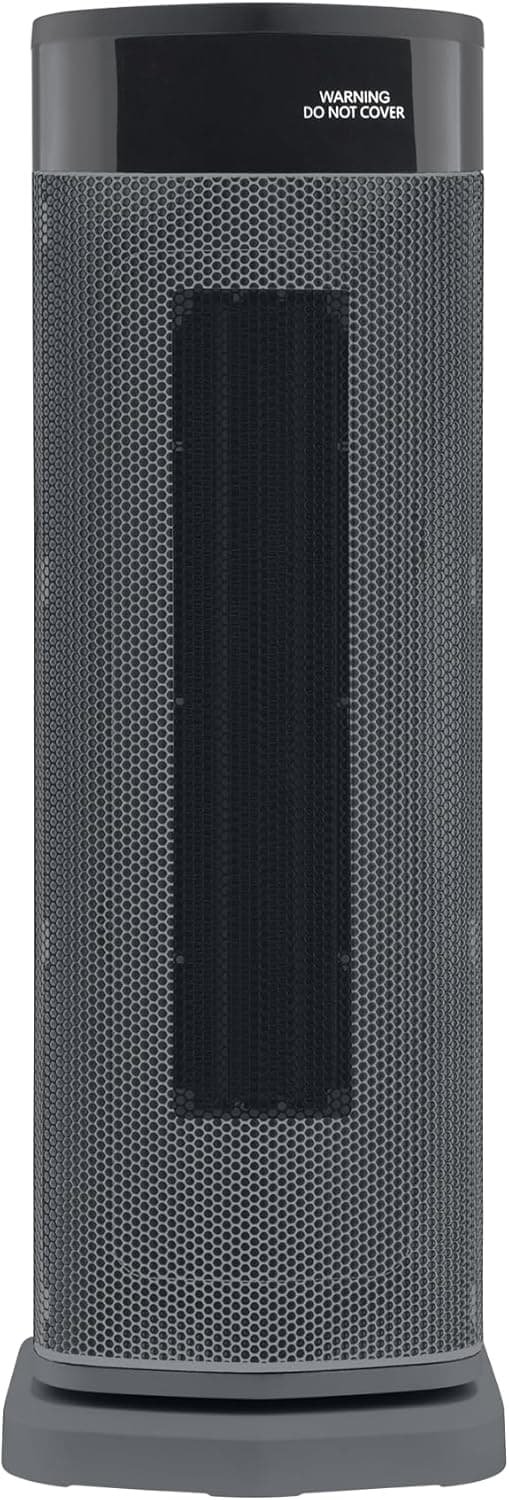
The Morphy Richards HeatFlux Digital Ceramic Tower Fan Heater belongs to a very different lineage. Here, fire has been disciplined, condensed, and—most strikingly—hidden. What was once a roaring presence is now a quiet column in the corner of a room, radiating comfort with the composure of a well-trained actor who never breaks character.
The Disappearance of Flame
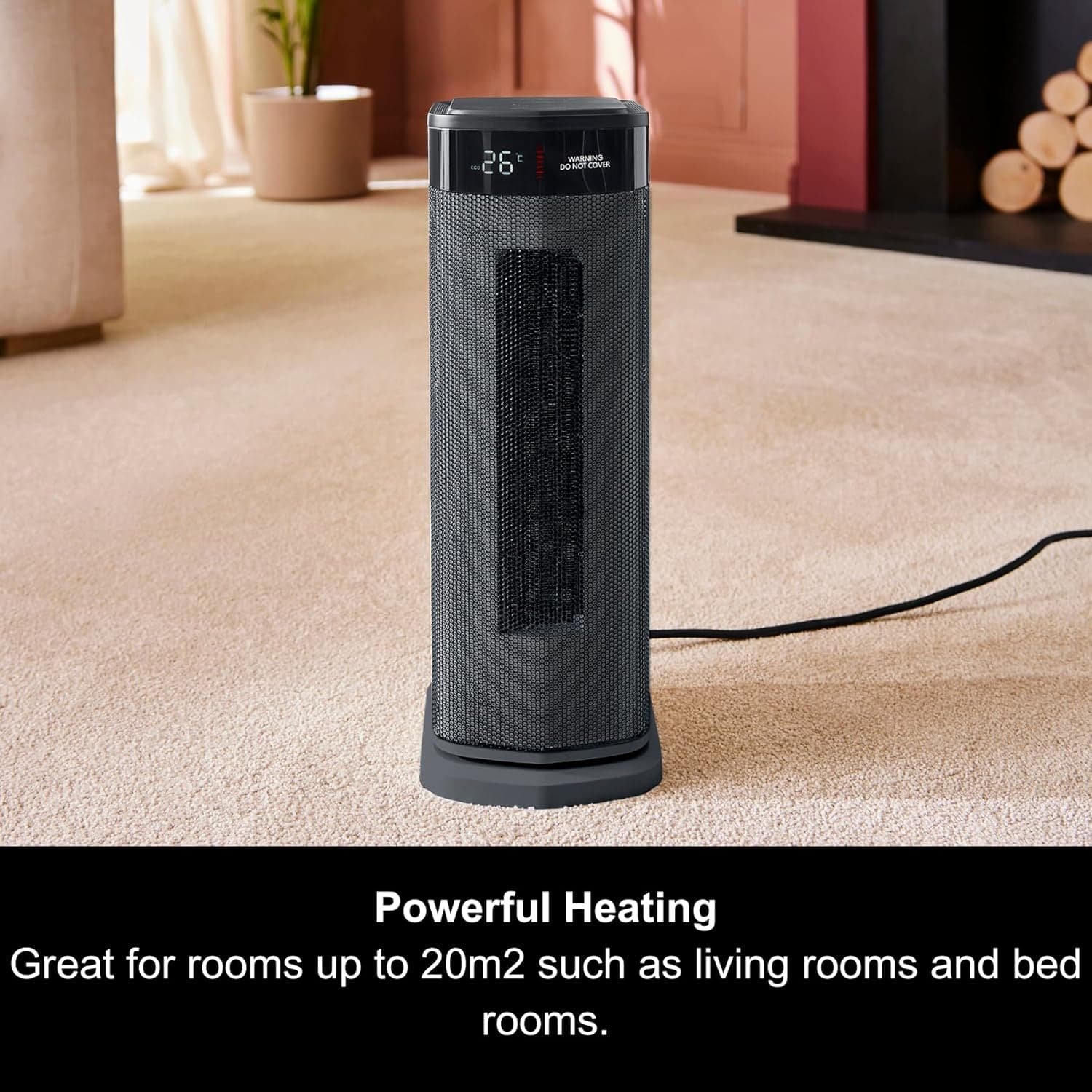
At 2000 watts, this heater is undeniably powerful. And yet, its strength is curiously discreet. There are no flames, no glowing embers—only the steady diffusion of warmth across spaces of up to 20 square meters.
This is the modern paradox: we have not diminished fire; we have made it invisible. Like electricity itself, it performs its work behind a curtain, leaving us with the illusion that comfort requires no effort at all.
Ceramic heating plays its part here, offering efficiency and consistency. Heat is not blasted—it is released, gradually and evenly, like ink spreading through water. A controlled transformation, precise and almost meditative.
The Vertical Gesture
Its tower design is more than aesthetic; it is symbolic. Where traditional heaters sprawled low and wide, this one rises. A vertical presence, slender and composed, as if space itself had become a consideration worthy of respect.
And perhaps it is. In modern homes—smaller, more curated—objects must justify their existence not only through function, but through form. This heater does both, occupying minimal space while quietly reshaping the atmosphere around it.
Movement and Stillness
With oscillation, the HeatFlux avoids the tyranny of uneven warmth. Heat travels, rotates, distributes itself with a rhythm that feels almost intentional. No corner is neglected; no space overheated.
And yet, the machine itself remains still. This contrast—internal motion, external calm—mirrors something deeply human. We, too, often strive to appear composed while everything within us is in motion.
Control Without Effort
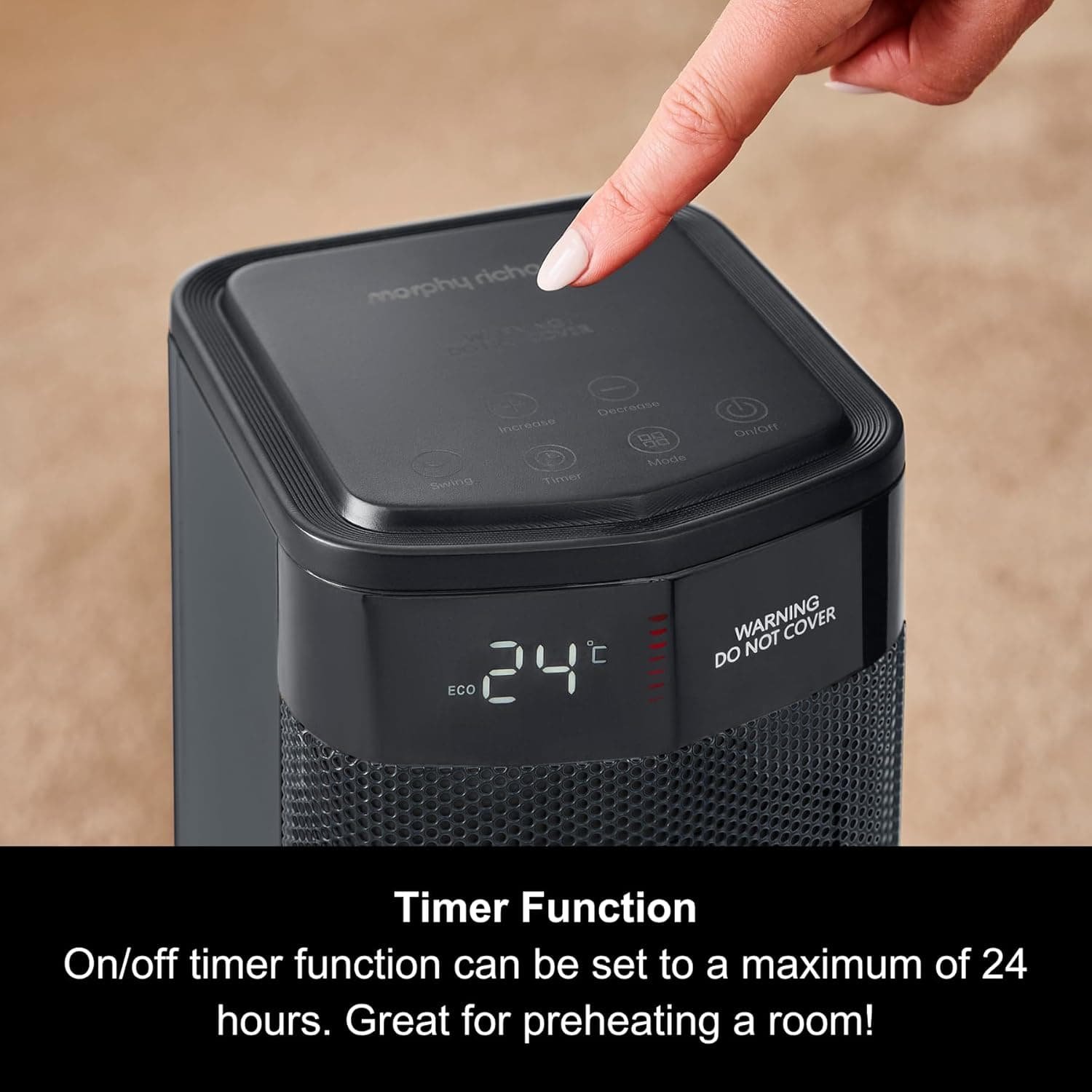
Remote control. Timer. Touch panel. Auto switch-off.
These features, listed plainly, might seem mundane. But together, they reveal a subtle shift in how we relate to our environment. Comfort is no longer something we chase; it is something we orchestrate.
You can schedule warmth before you feel cold. Adjust temperature without leaving your chair. Trust the device to turn itself off when necessary. It is, in a sense, a delegation of responsibility—outsourcing vigilance to a machine.
There’s a faint irony in this: the more control we gain, the less we actively engage.
The Sound of Quiet Warmth
Low noise operation ensures that the heater does not intrude upon the room’s atmosphere. It hums softly—if at all—like a distant presence rather than an immediate one.
Unlike the crackling drama of a fireplace, this is warmth without narrative. No sound to accompany it, no visual cue. Just the gradual realization that the cold has retreated.
And perhaps that is its greatest trick: making absence—the absence of cold—feel like presence.
Epilogue: From Fire to Function
If ancient fire was wild and mesmerizing, this heater is its philosophical opposite: controlled, efficient, almost indifferent. And yet, the purpose remains unchanged. Across centuries, across technologies, the human desire is the same—to carve out a pocket of comfort against the indifference of the world.
The Morphy Richards HeatFlux does not dazzle. It does not demand attention.
It simply transforms space, quietly and reliably.
And in that transformation, one glimpses the evolution of warmth itself:
from something we once feared… to something we now command with a fingertip.


Valoraciones
No hay valoraciones aún.